Durian: The Ultimate Litmus Test for Belonging in Malaysia
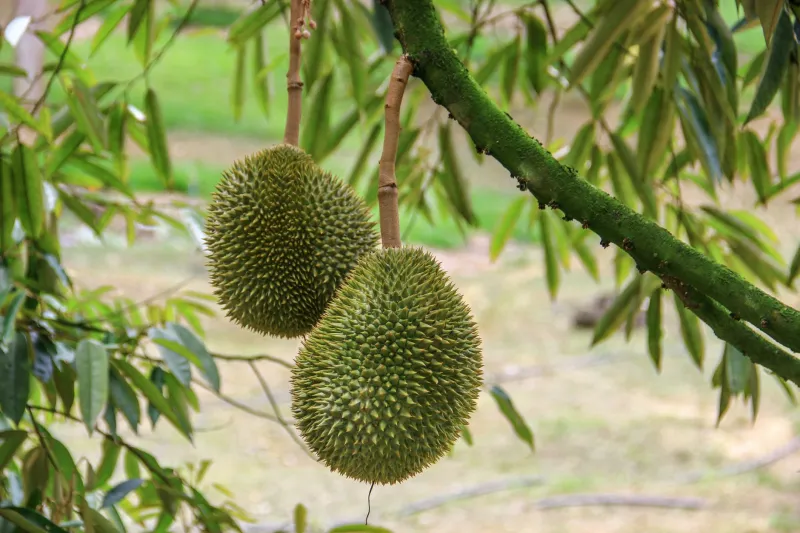
There's a moment every Malaysian knows well. Someone cracks open a durian — that thorny, football-sized fruit that smells like a combination of gym socks, custard, and something you can't quite name — holds out a golden, creamy pod, and says, "Makan lah." Just eat it.
What happens next tells you everything.
For Malaysians back home and the growing Malaysian diaspora scattered across the US, durian isn't just a fruit. It's a cultural password. A rite of passage. A loyalty test wrapped in a shell that could genuinely injure you if you're not careful. And if you're a Malaysian American trying to explain your identity to friends who've never left the country? Durian is somehow always part of that conversation.
Why Durian Hits Different for Malaysians
Malaysia is arguably the durian capital of the world. While Thailand exports more commercially, Malaysians will passionately — sometimes aggressively — tell you that Malaysian durian, particularly varieties like Musang King, D24, and Black Thorn, is simply on another level. The fruit is seasonal, expensive, and deeply tied to memory. Families drive hours to durian farms in Pahang or Penang. Friendships are built around late-night durian stalls. Grandparents are remembered partly by which variety they preferred.
When you grow up with durian in your life, it becomes emotional shorthand. It's the smell of balik kampung trips, of cousins arguing over the best pod, of aunties insisting you eat more even when you're already sweating from the heat. Durian doesn't just taste like something — it feels like something.
So when a Malaysian moves to the US and suddenly can't find fresh durian anywhere (frozen packets from the Asian grocery store do NOT count, and every Malaysian will tell you so), that absence becomes its own kind of homesickness.
The American Side of the Durian Experience
Here's where things get interesting for the US audience. Americans, by and large, have a deeply complicated relationship with durian — and by complicated, we mostly mean they run away from it.
The smell is the main event. Hotels across Southeast Asia ban durian. Airlines won't let you carry it on. There are actual warning signs. For Americans who encounter durian for the first time — usually at an Asian supermarket like H Mart or 99 Ranch, or at a Malaysian restaurant that's brave enough to serve it — the reaction is often dramatic. Social media is full of American food influencers gagging their way through durian challenges, faces contorted like they've been personally betrayed by a piece of fruit.
And Malaysian Americans? They watch those videos with a complicated mix of amusement, pride, and something that feels a little like protectiveness. That's our thing you're making a face at.
When Durian Becomes a Question of Identity
For second-generation Malaysian Americans, durian sits at a fascinating intersection. Many of them grew up eating it at home, maybe reluctantly at first, but eventually coming around. Others were raised in households where durian was a rare treat — saved for special occasions or trips back to Malaysia. Some never really got into it and quietly wonder if that makes them less authentically Malaysian.
That's the litmus test in action. And it's not just about taste.
When a Malaysian American brings durian to a potluck and their non-Malaysian friends back away, there's a split-second decision: do you apologize for the smell, or do you stand your ground and explain why this is actually the King of Fruits? Do you feel embarrassed, or do you feel proud?
That moment — that choice — is a microcosm of what it feels like to navigate a hyphenated identity in America. You're constantly translating yourself. Durian just makes the translation very, very obvious.
The Durian Divide Back in Malaysia
Even within Malaysia, durian creates its own divisions. There are the hardcore fans who treat Musang King the way Americans treat craft beer — obsessively tracking farms, debating vintages, spending serious money for the good stuff. Then there are Malaysians who genuinely don't like it, and they will tell you they've spent their whole lives being judged for it.
Religious and cultural backgrounds play a role too. While durian is beloved across ethnic lines — Malay, Chinese, Indian, and Indigenous communities in Malaysia all have their own durian traditions — the way it's eaten and celebrated can vary. Some families eat it straight from the shell at roadside stalls. Others blend it into desserts, ice cream, or the iconic durian crepe cakes that have been showing up at Malaysian bakeries in cities like LA, New York, and Houston.
Those crepe cakes, by the way, are doing serious work as durian ambassadors. More than one American has been converted to durian fandom through a beautifully made, Instagram-worthy durian crepe. The smell is more subtle, the texture is familiar, and suddenly — the door is open.
Why the Litmus Test Actually Matters
It might seem like a lot of weight to put on a fruit. But that's kind of the point.
Durian forces a reaction. You can't be neutral about it. And in a world where Malaysian identity — especially for diaspora communities in the US — can feel slippery and hard to define, durian is refreshingly concrete. You either know it, love it, grew up with it, or you're learning about it for the first time. All of those positions are valid starting points for a real conversation.
For Americans curious about Malaysian culture, engaging honestly with durian — not just as a gross-out challenge but as something genuinely important to a lot of people — is a form of respect. And for Malaysian Americans, sharing durian with someone who's willing to actually try it (and maybe actually like it) is one of the most satisfying cultural bridges you can build.
So, Do You Pass the Test?
Here's the thing about the durian litmus test: there's no wrong answer. You don't have to love durian to belong. Plenty of Malaysians don't. But being willing to sit with it, to understand why it matters, to not make someone feel weird for caring deeply about a spiky, smelly fruit — that's what actually counts.
Whether you're a Malaysian in Kuala Lumpur, a Malaysian American in San Francisco, or an American who just stumbled across a durian video at 2am and ended up here — welcome to the conversation. Pull up a chair. The durian's already open.
Have a durian story — love it, hate it, or somewhere in between? Drop it in the comments. This is TellMe Malaysia, and we actually want to hear it.