Flex, Adapt, Deliver: How Malaysian Professionals Are Rewiring American Work Culture
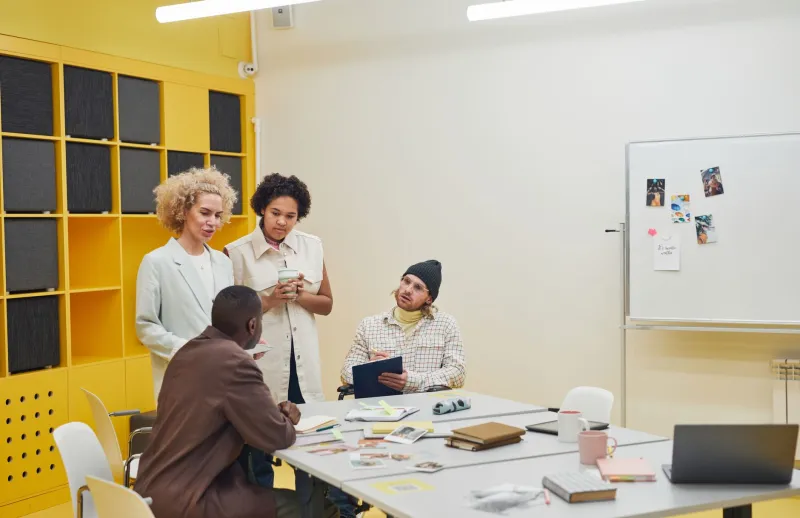
There's a phrase you'll hear constantly in Malaysia: takpe lah — loosely translated, it means "it's fine" or "no worries." On the surface, it sounds like an excuse to slack off. But spend any time working alongside Malaysian professionals, and you'll quickly realize it's something far more powerful: a deeply pragmatic, people-first philosophy that gets things done without burning everyone out in the process.
And apparently, American workplaces are starting to notice.
The Meeting That Didn't Need to Be an Email — Or a Fight
Shereen Lim has been a product manager at a mid-size SaaS company in Austin, Texas, for the past four years. Originally from Petaling Jaya, she moved to the US after completing her MBA at UT Austin and never quite left. She describes her first few months in the American corporate world as a culture shock — but not in the direction you'd expect.
"I was surprised by how much energy went into conflict," she says, laughing. "Not bad conflict necessarily, but just... friction. Every disagreement had to be a formal process. Every pivot felt like someone was admitting defeat."
Back home, she explains, business relationships are built on a foundation of trust and mutual flexibility long before contracts get signed. Deals are made over long lunches, and renegotiating terms mid-project isn't seen as a failure — it's just how things go. You adapt. You find a way.
"In Malaysia, you build the relationship first, and the business follows," Shereen says. "Here, a lot of companies do it the other way around — and then they're surprised when things fall apart the moment something goes sideways."
Relationship-First, Results Always
This isn't just a personal observation. A number of Malaysian-born founders and executives operating in the US echo the same sentiment: the cultural wiring they grew up with — shaped by Malaysia's multiethnic, multilingual, negotiation-heavy social fabric — translates surprisingly well into modern business environments that are increasingly demanding agility.
Kuala Lumpur native Marcus Tan co-founded a logistics tech startup in Chicago three years ago. His team is a mix of American, Filipino, and Malaysian hires, and he's deliberately tried to build what he calls a "kampung-style" work culture — the Malay word kampung meaning village, with all the communal warmth that implies.
"In a kampung, you don't just transact with your neighbor. You know their family. You show up when something goes wrong. That's the energy I try to bring into how we work," Marcus explains. "It sounds soft, but it's actually incredibly effective. Our retention rate is way above industry average."
His American co-founder, Derek Walsh, admits he was skeptical at first. "I came from a consulting background where the culture was very output-obsessed, very hierarchical," Derek says. "Marcus kept slowing me down to check in on how people were feeling about a project. I thought it was inefficient. Turns out, it saved us from at least two major team blow-ups."
The Pragmatism Factor
Malaysia's business culture didn't develop in a vacuum. As a country that's had to navigate colonial history, rapid industrialization, and the constant balancing act of a diverse multicultural society, Malaysians have developed what some organizational psychologists might call high "cultural intelligence" — the ability to read a room, adapt communication styles, and find workable compromises across very different worldviews.
For Farah Adzhar, a UX researcher now based in Seattle, this shows up in how she approaches client relationships. "I'm very comfortable sitting with ambiguity," she says. "A lot of my American colleagues want everything defined upfront — every deliverable, every deadline, every possible scenario. That's not always realistic. I'm okay saying, 'Let's figure it out as we go, but here's what I promise you at the end.' Clients actually respond well to that honesty."
She's quick to note this isn't about being disorganized. It's about distinguishing between structure that serves the work and structure that just makes people feel comfortable.
Not Without Friction
Of course, it's not all smooth sailing. Several Malaysian professionals we spoke to mentioned the challenge of being perceived as "too relaxed" or "not assertive enough" in environments that reward the loudest voice in the room.
"There's still a bias in American corporate culture toward a very specific kind of confidence — the person who dominates the meeting, who talks the most," Shereen admits. "That's not always how I operate. I listen a lot before I speak. Some people read that as disengagement. It's actually the opposite."
Marcus agrees that the learning curve goes both ways. "I've had to become more direct than I naturally am. In Malaysia, a lot of communication is indirect — you read between the lines. Here, if you don't say it plainly, it often doesn't land."
What American Companies Can Actually Take Away
So what's the practical takeaway for US businesses? According to the Malaysians we spoke to, it comes down to three things: invest in relationships before you need them, treat flexibility as a feature rather than a bug, and understand that the best solutions often come from people who've had to navigate complexity their whole lives.
"America has so much to offer — the scale, the ambition, the resources," Farah says. "But there's a kind of cultural humility that some companies are still learning. The idea that the way you've always done things isn't the only way."
That's a message TellMe Malaysia hears from our community all the time — that Malaysian perspectives, forged in one of Southeast Asia's most dynamic and diverse societies, have real value to offer the world. And slowly, quietly, American workplaces are starting to agree.
Got a story about Malaysian work culture making waves in the US? Tell us — that's literally what we're here for.