At Ten Years Old, I Was My Family's Lawyer, Doctor, and Translator. I'm Not the Only One.
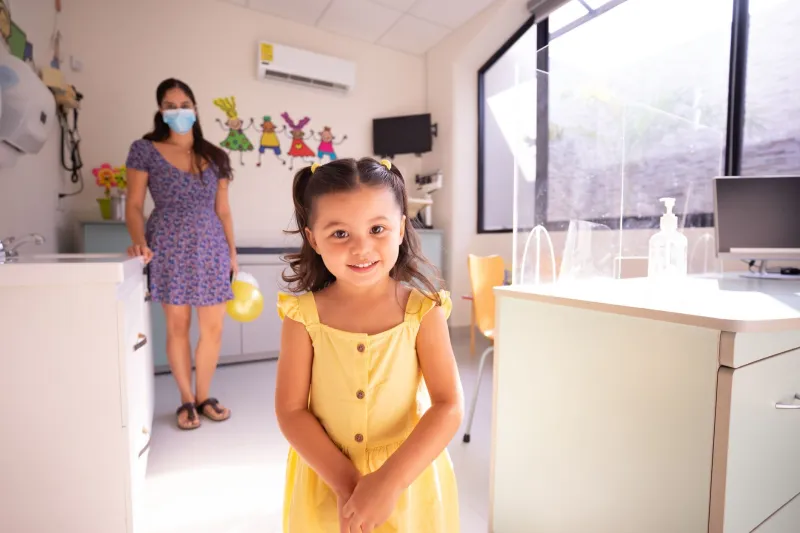
The first time Priya had to translate for her mother at a doctor's office, she was nine years old and didn't know what the word "biopsy" meant. She asked the doctor to spell it, wrote it on her palm in pen, and looked it up on the waiting room computer later. Then she went back in and explained it to her mother as best she could, watching her mother's face for signs of understanding, choosing which parts to soften and which parts to say plainly.
Priya is now twenty-six, living in Atlanta, and working in healthcare administration — a career she half-jokingly attributes to spending her childhood in medical offices she had no business being in. She describes those years with a mixture of pride and something harder to name. "I felt useful," she says. "I also felt terrified a lot of the time. Both things were true."
Her story is not unusual. Across the United States, children of immigrant families — including tens of thousands from Malaysian backgrounds — serve as what researchers call "language brokers": informal interpreters who navigate adult systems on behalf of parents or grandparents who are still building English fluency. They translate at pharmacies and parent-teacher conferences, on phone calls with insurance companies, at immigration appointments, in courtrooms. They do this without training, without compensation, and usually without anyone acknowledging that it's an enormous amount of responsibility to place on a child.
The Scope of Something Nobody Counts
There's no official census of language brokers in the U.S. because the role is entirely informal — it happens in the space between institutions and families, invisible to the systems those families are trying to navigate. But researchers who study immigrant communities estimate that millions of children in the U.S. serve in this capacity at some point during their childhoods. For Malaysian-American families, the picture is layered: many parents speak English well but encounter bureaucratic language, medical jargon, or legal terminology that requires a different kind of fluency. The child who grew up here, who absorbed American idiom and institutional vocabulary through school and media, becomes the bridge.
The topics they bridge are not small. Community members who shared their experiences with TellMe Malaysia described translating eviction notices, hospital discharge instructions, Social Security paperwork, IRS correspondence, and school disciplinary hearings. One woman remembered being twelve and trying to explain to her father — during a heated phone call she was translating in real time — that the bank was beginning foreclosure proceedings on their home. She didn't fully understand what foreclosure meant. She translated the words anyway.
What It Costs
Psychologists who study language brokering have found a genuinely mixed picture of its effects. On one hand, children who broker languages often develop remarkable skills: advanced vocabulary, strong reading comprehension, heightened empathy, an ability to read rooms and adapt communication style that serves them well into adulthood. Many describe the experience as a source of deep connection to their families and pride in their cultural identity.
On the other hand, the psychological literature also documents real costs. Chronic stress from navigating high-stakes adult situations without adult support. Role reversal — the technical term is "parentification" — where a child begins to feel responsible for their parent's wellbeing in ways that blur appropriate boundaries. Anxiety around making mistakes, because in these contexts, a mistranslation isn't just embarrassing; it can have serious consequences for the family.
For Malaysian-American families specifically, there's an additional cultural dimension. Many Malaysian parents carry a strong sense of dignity around their professional and social standing. Needing their child to speak for them in public — at a bank, a hospital, a school — can feel humiliating, even when the child means nothing but love by it. That tension often goes unspoken. The parent doesn't say "I feel ashamed." The child doesn't say "I feel overwhelmed." Everyone just gets through the appointment and goes home.
The Things They Learned to Do in the Middle
Ask a former child language broker what skills they developed, and the list is striking. Reading body language. Managing someone else's emotional state while processing information simultaneously. Knowing when to translate literally and when to translate meaning — because those are not the same thing. Understanding that the goal is not perfect accuracy but effective communication, and that sometimes those conflict.
James, a thirty-two-year-old Malaysian-American who grew up in suburban New Jersey, says his years of translating for his grandmother — who spoke primarily Cantonese and Hokkien — gave him an instinct for ambiguity that he now uses as a mediator in labor disputes. "You learn really fast that two people can be saying completely different things and both believe they're being clear," he says. "That's basically my whole job now."
Marcella, who grew up translating for her Malaysian-born mother in Houston, is a nurse. She specifically sought out training in medical interpretation because she remembered, acutely, what it felt like to be a child in that role without any of the tools. "I wanted to be the person who makes sure a family never has to send their kid into that room," she says.
Why We Don't Talk About This More
The silence around language brokering is itself a cultural phenomenon worth examining. In many immigrant communities — and Malaysian culture is no exception — there's a strong ethic around family loyalty and not airing private difficulties publicly. The idea that your child had to translate your medical records feels like evidence of vulnerability, and vulnerability is not always comfortable to display.
For the children, there's often a sense that their experience isn't remarkable enough to name. They did what their family needed. Plenty of kids have it harder. Why would they complain?
But naming something isn't complaining. It's the first step toward supporting the people who've lived it — and toward building systems that don't require children to carry adult responsibilities in the first place. Hospitals, schools, and government agencies in the U.S. are legally required to provide interpreter services in many contexts. That requirement exists precisely because child interpreters, however capable, are not a substitute for professional support. The gap between what the law requires and what actually happens in practice is where children end up filling the void.
Telling the Story Differently
What strikes us most, talking to people who grew up this way, is how rarely they've had space to tell this story as their own — not as a footnote in their family's immigration narrative, but as something that happened to them, shaped them, and deserved acknowledgment.
So: if you grew up as the family translator, the family phone-call-handler, the kid who read the lease before your parents signed it — your experience is real, it matters, and it's shared by far more people than you might think.
Tell us your story. That's exactly what this community is here for.