So Your Kid Is Crying Laughing at a Malaysian Meme and You Have No Idea Why
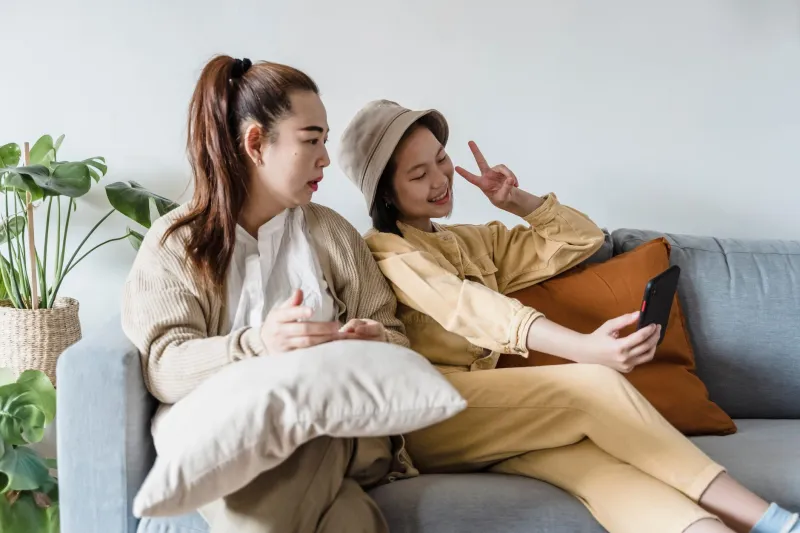
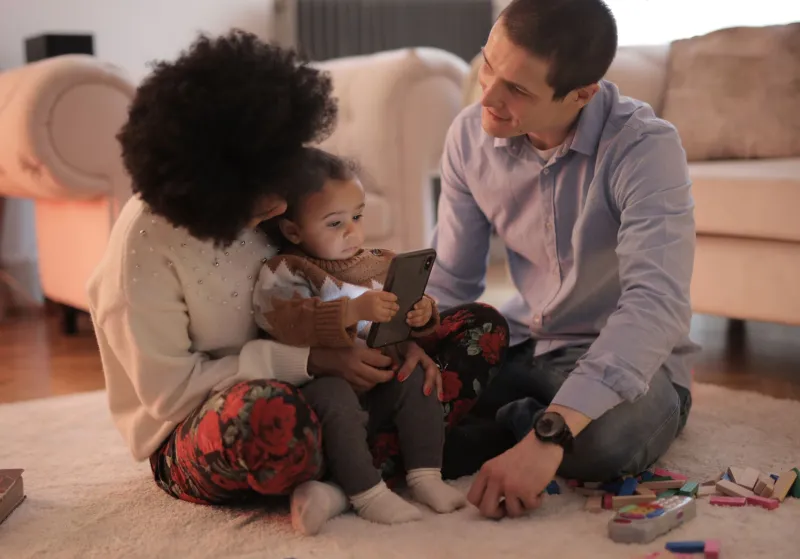
It starts the same way every time. Your kid shoves a phone in your face, already doubled over. You squint at the screen. There's a video — maybe it's someone dramatically scolding a pot of rice, or a guy doing a dead-on impression of a Malaysian auntie at a pasar malam. Your kid is losing it. You smile politely. You have absolutely no idea what just happened.
Welcome to the TikTok generation gap, Malaysian edition.
For Malaysian parents raising kids in the US, social media has become a strange mirror — one that reflects pieces of their homeland back at them, refracted through Gen Z humor, trending audio, and content that somehow speaks to their American-born children more fluently than years of home-cooked nasi lemak and family stories ever did.
"I Raised You on This Culture. Why Does a Stranger's Video Explain It Better?"
Fatimah, 51, moved from Petaling Jaya to suburban New Jersey in the late 1990s. Her two daughters, now 19 and 22, have grown up toggling between two worlds — American school days, Malaysian weekends. But lately, the cultural transmission has been flowing in an unexpected direction.
"My younger one showed me a TikTok of a girl packing her bag for school with like fifteen layers of tupperware," Fatimah says, laughing at the memory. "She was so happy. She said, 'Mom, that's literally you.' And I thought — yes, okay, that is me. But why is that funny?"
The humor isn't just lost in translation. It's operating on a frequency that requires fluency in both cultures simultaneously — something the kids have, and the parents are still downloading.
Dr. Lim Wei Han, a cultural communications researcher at a Boston-area university (and a Malaysian expat himself), calls it "diasporic comedy resonance." Basically: content that lands hardest when you're caught between two identities. "These kids laugh because they finally see themselves represented — the specific texture of their home life, their parents' quirks, their code-switching — reflected back on a global platform," he explains. "For the parents, it can feel alienating. Like the joke is somehow on them."
It's not. But it can feel that way.
The Algorithm Knows Your Family Better Than You Think
Here's the wild part: TikTok's algorithm doesn't care about borders. It just serves what resonates. And apparently, content rooted in the Malaysian-diaspora experience — the parental pressure, the food obsessions, the aunties, the Manglish — resonates widely.
Creators making videos about Malaysian family dynamics have found audiences not just among diaspora kids but among American viewers who've never set foot in Kuala Lumpur. The specificity, it turns out, is the universal part.
Rajan, 48, a Malaysian-Indian father in Houston, discovered this when his son Marcus walked him through his For You Page one Sunday afternoon. "There was a video of a kid getting scolded for leaving rice in the cooker," Rajan recalls. "The mom's expression — I know that face. I make that face. Marcus looked at me and just started pointing. He couldn't stop laughing."
Rajan admits he didn't fully get the joke at first. But he watched the video three more times that week. "Slowly I understood. It's not making fun. It's more like... celebrating. They're saying, this is our thing, and it's funny because it's ours."
That shift in perspective — from feeling mocked to feeling seen — is something a lot of Malaysian parents describe once they give themselves permission to sit with the content a little longer.
The Conversations That Happen After the Scroll
What's genuinely surprising is how TikTok has become an unlikely dinner-table bridge for some families. Priya, 44, originally from Penang and now living in the Bay Area, says she started asking her daughter Aisha to explain the memes instead of just nodding along.
"At first I felt embarrassed. I'm her mother — shouldn't I already know this?" Priya says. "But then Aisha started telling me about Malaysian creators she follows, and she started asking me questions. Like, 'Mom, is it true people in Penang are really territorial about their hawker food?' And suddenly we're talking for an hour."
Those conversations matter. Because beneath the absurdist humor and trending sounds, a lot of Malaysian-American Gen Z kids are using social media to process something genuinely complicated — a cultural inheritance they received secondhand, in a country where it's often invisible.
When a TikTok creator makes a video about the emotional weight of speaking Malay at home but English everywhere else, or about the very specific guilt of not finishing your plate, these kids aren't just laughing. They're locating themselves.
Tips for Parents Who Want In (Without Being Cringe)
So what's a Malaysian parent to do when the algorithm has become the family's unofficial cultural ambassador? A few things that actually work, according to the families we spoke with:
Ask, don't perform. Don't try to make your own TikTok. Just ask your kid to walk you through what they're watching and why it's funny. Curiosity goes a long way.
Share your own version. If a meme references something from Malaysian life, add context. "You know, when I was growing up in KL..." is a sentence that opens more doors than you'd expect.
Let yourself be the punchline sometimes. The auntie energy, the food container collection, the WhatsApp voice notes at 6 AM — your kids find it funny because they love it. That's the whole thing.
Don't gatekeep the culture. It can sting a little when a stranger's 60-second video seems to communicate your heritage more effectively than years of effort. But if it's getting through to your kid, that's a win. Full stop.
Fatimah puts it simply: "I spent twenty years trying to make sure my daughters didn't forget where they came from. Now TikTok is helping me do it. I'm not going to complain about that."
She pauses. "Even if I still don't understand why the rice cooker video is so funny."
Honestly, Fatimah? Same. But keep watching. It'll hit eventually.