Tunggu Dulu: How Malaysians Turned 'Wait a Bit' Into a Whole Philosophy for Living
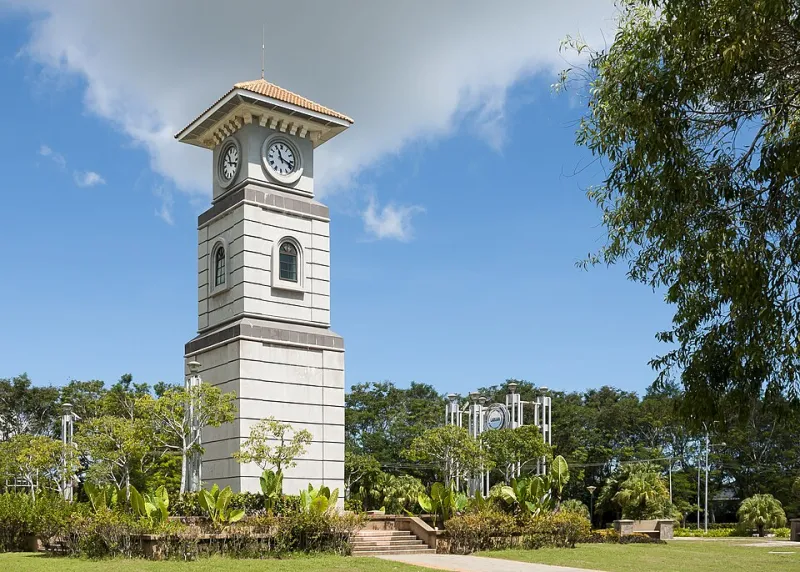
Photo: Sebleouf, CC BY-SA 4.0, via Wikimedia Commons
You've just landed a meeting with a potential business partner in Kuala Lumpur. You've prepped your deck, rehearsed your pitch, and blocked out exactly forty-five minutes because — back home in, say, Chicago or Austin — that's how meetings work. Tight. Efficient. Transactional.
Then your Malaysian counterpart smiles, orders teh tarik for the table, and says, "No rush lah. We talk first."
And just like that, your carefully engineered timeline starts to dissolve — not because anything is going wrong, but because something very different is going right.
Welcome to the world of tunggu dulu.
What Does Tunggu Dulu Actually Mean?
Literally translated, tunggu dulu means "wait first" or "hold on a moment." But like most Malaysian phrases worth knowing, the literal translation barely scratches the surface.
In practice, tunggu dulu is a worldview. It's the verbal expression of a culture that has — over centuries of navigating colonial rule, multiethnic coexistence, monsoon seasons, and the general unpredictability of tropical life — learned that urgency is often the enemy of good outcomes.
It shows up everywhere. The construction project that's been "almost done" for eight months. The business proposal that's "under consideration" indefinitely. The wedding date that's set but might shift because the venue might be available on a better day. The friend who'll confirm plans "closer to the time."
To American ears, this sounds like chaos. To Malaysians, it sounds like common sense.
The Hustle Culture Hangover
America has built an entire identity around speed. Overnight shipping. Instant replies. Five-year plans that should really be three-year plans. The cultural messaging is relentless: move fast, break things, time is money, you snooze you lose.
And sure, that energy has produced some remarkable things. But it's also produced a nation of burned-out professionals who can't sit through a meal without checking their phones, and a therapy industry that's never been busier.
Malaysia didn't build its culture in opposition to hustle — it just never fully bought into it in the first place. The reasons are layered. Geography plays a role: when you live in a country where the rain can shut down a road, a flight, or an outdoor event with zero warning, rigid timelines become a form of self-delusion. Religion matters too — Islam, Buddhism, Hinduism, and Christianity all share, in their own ways, a philosophical acceptance that some things are simply not within human control. And then there's the social fabric: in a country where maintaining harmony across racial and religious lines is an active, daily project, learning to not force outcomes is practically a civic duty.
When Waiting Is Actually Working
Here's what Americans often miss: tunggu dulu isn't passive. It's not giving up or giving in. It's a calculated pause — a way of keeping options open while circumstances clarify themselves.
Take business negotiations. In the US, silence in a deal can feel like a red flag. Crickets mean the other side is pulling out, or losing interest, or playing games. In Malaysia, silence often means the opposite: the other party is thinking seriously, consulting family or community members whose opinions matter, and building the internal consensus they'll need to actually follow through. Push too hard during that silence and you don't speed things up — you blow the whole thing up.
Or consider relationship timelines. Malaysian couples — particularly those navigating family expectations across cultural and religious lines — often operate on a pace that would make an American dating coach tear their hair out. Things move slowly. Parents are consulted. Community approval is sought. Decisions that would take a Western couple a weekend to hash out might take a Malaysian family six months. But when the commitment is finally made, it tends to stick — because everyone who needs to be on board already is.
Even infrastructure, often cited as Malaysia's most visible example of tunggu dulu in action, tells a more complicated story. Yes, projects run long. Yes, the LRT extension that was supposed to open in 2022 opened in 2024. But Malaysia has also built world-class highways, a functioning metro system, and one of Southeast Asia's most impressive airports — in a country that was still largely agricultural sixty years ago. The pace looked slow. The results were real.
So What's the Actual Lesson for Americans?
If you're an expat living in Malaysia, or even just visiting for a few weeks, the adjustment to tunggu dulu culture can feel maddening at first. You'll wait for contractors who don't show up on time. You'll get meeting confirmations that aren't really confirmations. You'll ask for a straight answer and receive a warm smile and a "we'll see."
The instinct is to interpret all of this as disorganization. But the more useful reframe is this: Malaysia is constantly asking a question that American hustle culture rarely stops to ask — does this actually need to happen right now?
Often, the honest answer is no. The email can wait an hour. The decision can breathe for a week. The plan can stay loose until the variables settle. And in the meantime, relationships are being tended to, trust is being built, and the social glue that makes everything else possible is quietly doing its work.
Learning to Sit With Uncertainty
There's a reason mindfulness, meditation, and "slow living" have become multi-billion dollar wellness industries in the US — Americans are desperately trying to buy back the ease that cultures like Malaysia never fully gave up.
You don't have to move to KL to absorb some of this. But it helps to understand where it comes from. Tunggu dulu isn't a character flaw or a productivity gap. It's an adaptation — a genuinely sophisticated response to a world that doesn't always cooperate with our spreadsheets.
The next time something doesn't happen on your preferred timeline, try asking yourself what a Malaysian auntie might ask: Kenapa tergesa-gesa? Why the rush?
The answer might surprise you. Or it might not come right away.
Either way, tunggu dulu. It'll get here when it gets here.