Why American Gen Z Can't Stop Laughing at Malaysian Memes (And Honestly, Same)
There's a specific kind of confusion that happens when an American Gen Z user stumbles onto a Malaysian meme for the first time. The caption might be half English, half Bahasa Malaysia, with a dash of Manglish thrown in for good measure. The image could be a sweaty guy clutching a styrofoam cup of teh tarik at a roadside kopitiam. The joke? Somehow, inexplicably, perfectly relatable.
And yet — they laugh. They share it. They go digging for more.
Over the past two years, Malaysian internet culture has been quietly infiltrating TikTok For You Pages and Reddit threads across the United States, finding a surprisingly enthusiastic audience among younger Americans who've never set foot in Southeast Asia. The question isn't just how it's happening — it's why it hits so different.
The "Broken English" That Isn't Broken At All
A huge part of Malaysian meme culture lives in the language itself. Manglish — that beautiful, chaotic creole of Malay, English, Cantonese, Tamil, and a dozen other influences — reads like a glitch in the matrix to outsiders. Phrases like "can or not?", "why you like that one?", and "already lah" carry emotional weight that standard English just can't replicate. There's a compression to Manglish. A whole vibe in two words.
American Gen Z, a generation that built an entire communication system out of abbreviations, reaction images, and ironic sentence fragments, gets it immediately. The structure of Manglish — punchy, expressive, layered — maps weirdly well onto the internet dialect that younger Americans already speak fluently.
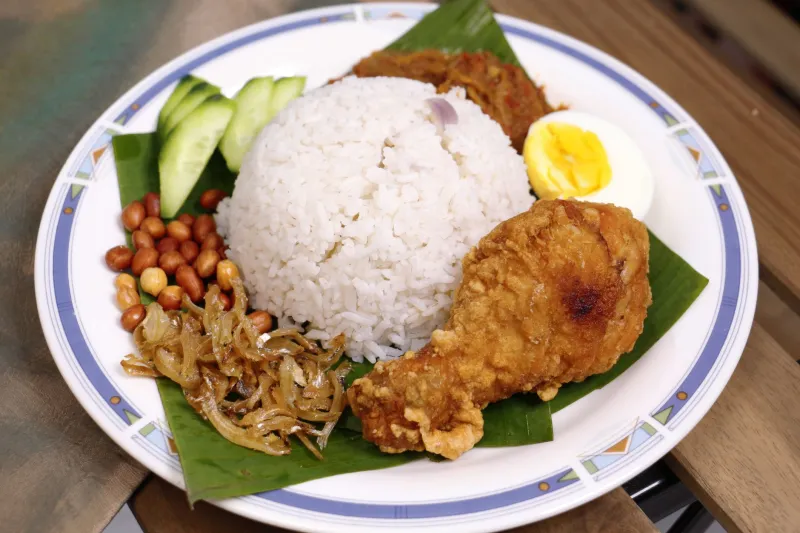
KL-based content creator Jess Tan, who runs a TikTok account with over 280,000 followers including a growing US fanbase, says she didn't plan to go cross-cultural. "I was just making videos for my friends about things that annoyed me," she told us. "Then one day I posted about how Malaysians argue about the 'right' way to eat nasi lemak and suddenly Americans were in my comments saying 'this is literally us with mac and cheese.' I didn't expect that."
That's the thing. The specificity is the point.
The Durian Discourse and Why It Works
If you've spent any time in Malaysian internet spaces, you know that durian is not just a fruit. It is a personality test, a cultural battlefield, and an endless content well. Malaysians have strong, loudly held opinions about which region grows the best durian, whether eating it with rice is acceptable, and what it says about your character if you claim to hate the smell.
To an American who has maybe seen durian once in an H Mart and backed away slowly, this level of investment seems absurd. And that absurdity is exactly what makes it funny.
A meme format that went viral on Reddit's r/malaysia — later picked up and reposted across r/funny and r/asianamerican — featured a multipart comparison chart breaking down "durian people" versus "non-durian people" with the energy of a political debate. American users flooded the comments not with confusion, but with their own hot takes. Substitute durian for blue cheese or candy corn and suddenly the format makes perfect sense.
Creator Marcus Lim, who runs the Instagram page @kopitiam.memes, has built a 90,000-follower account almost entirely around the rituals of Malaysian coffee shop culture — the plastic stools, the condensed milk, the uncles who've been sitting at the same table since 1987. "People DM me from Texas, from Ohio, saying they show my posts to their parents because it reminds them of diners back home," he said. "The setting is different. The feeling isn't."
Reddit's Unexpected Role in the Crossover
While TikTok gets most of the credit, Reddit has been quietly doing heavy lifting in bringing Malaysian meme culture to American audiences. Subreddits like r/malaysia and r/malaysians have become unlikely tourism portals — places where curious Americans drop in after seeing a reposted meme and end up staying for hours, reading threads about traffic jams on the Federal Highway or the eternal debate over whether Penang or KL has better char kway teow.
The comment sections are where the real cultural exchange happens. Malaysians explaining context, Americans asking genuine questions, and somewhere in the middle, a mutual appreciation forming over shared experiences of humid weather, confusing family gatherings, and the specific exhaustion of living in a country that never quite matches the version of itself on the tourist brochure.
"Reddit gave us a place to be honest," says Kuala Lumpur writer and part-time meme archivist Priya Nair. "Malaysian humor has always been about finding the funny in the frustrating. Traffic, bureaucracy, aunties who ask too many questions at family dinners. Americans relate to all of that. They just didn't know we were out here making jokes about it too."
The TellMe Factor: Why Community Humor Travels
What makes Malaysian meme culture specifically sticky for American audiences isn't novelty — it's community. Malaysian internet humor is fundamentally about shared experience, the kind of inside-joke energy that says you have to be from here to fully get it, but you're welcome to try. That invitation matters.
American Gen Z, raised on parasocial relationships and algorithm-sorted content bubbles, responds intensely to anything that feels genuinely communal. Malaysian memes carry the warmth of a group chat between people who actually know each other. Even when the reference goes over your head, the feeling of being included in the joke lands.
At TellMe Malaysia, we've seen this firsthand in our own community. When we post content rooted in hyper-local Malaysian experiences — the panic of a last-minute Hari Raya preparation, the unspoken rules of a pasar malam — our US-based readers don't just scroll past. They comment. They tag friends. They ask questions.
That's not an accident. That's what happens when a culture stops trying to translate itself and just starts talking.
What's Next for Malaysian Meme Culture?
Creators like Jess, Marcus, and Priya aren't chasing American audiences — they're just making content that's true to their experience, and the audience is showing up anyway. That authenticity is increasingly rare in an internet landscape full of optimized, algorithm-chasing content, and Gen Z can smell the difference.
Malaysian humor isn't about to go mainstream in the way K-pop or anime did. It's not trying to. It lives in the corners of the internet where the best stuff always lives — specific, a little chaotic, and completely uninterested in explaining itself to you.
Which, honestly? Is exactly why it works.
Got a Malaysian meme that broke through to your American friends? Tell us about it in the comments — this is your space to share.