We Asked Malaysian Americans to Tell Us Who They Really Are. Here's What They Said.

Ask a Malaysian American what the most frustrating question they get is, and you'll hear some variation of the same answer: "But where are you really from?"
It doesn't matter if they grew up in California or were born in Michigan. It doesn't matter if their parents immigrated thirty years ago or if they came over on a student visa and never left. The question implies something — that belonging is conditional, that identity is geography, that the hyphen in "Malaysian-American" is a problem to be solved rather than a story to be told.
At TellMe Malaysia, we believe the most important stories are the ones that don't fit neatly into a headline. So we asked our community — Malaysian Americans scattered across the country, from Houston to Seattle to New York — to tell us the things mainstream media consistently gets wrong about who they are. The responses were honest, sometimes uncomfortable, and entirely necessary.
"We Are Not One Thing"
The first misconception that came up, again and again, was the assumption of homogeneity. Malaysia is one of the most ethnically and religiously diverse countries in Southeast Asia — Malay, Chinese, Indian, Orang Asal communities, and dozens of smaller groups, each with distinct languages, traditions, and histories. When Americans hear "Malaysian," they often picture a single, unified cultural identity. The reality is far more layered.
"People ask me what Malaysian food is like and I have to explain that my grandmother's cooking and my Malay college roommate's grandmother's cooking are completely different cuisines," says Siew Mei, a 29-year-old graphic designer living in Austin, Texas. "We grew up in the same country. We ate at the same hawker stalls. But our home kitchens? Completely different worlds. And both of them are Malaysia."
This complexity gets flattened in American media, where Southeast Asian representation tends to blur national and ethnic distinctions into a vague, interchangeable category. Malaysian Americans often find themselves simultaneously over-explained and under-represented — too specific for the broad "Asian American" narrative, too unfamiliar to anchor their own.
The Model Minority Myth Hits Different When You're Malaysian
The model minority stereotype — the idea that Asian Americans are uniformly high-achieving, quietly successful, and culturally assimilated — has been widely criticized within broader Asian American communities. For Malaysian Americans, the myth carries additional complications.
"There's this assumption that I got here on some kind of academic scholarship pipeline, that I'm going to be an engineer or a doctor, that my family is financially comfortable," says Raj, a 34-year-old social worker in Philadelphia whose parents immigrated from Penang in the late 1990s. "My dad drove for a ride-share company for six years after we got here. My mom cleaned houses. We were not the immigrant success story people wanted us to be, and I spent a long time feeling ashamed of that instead of proud of them."
The model minority myth doesn't just misrepresent — it silences. It makes it harder for Malaysian Americans navigating real financial hardship, mental health struggles, or family dysfunction to speak up, because the narrative insists those experiences don't belong to people like them.
On Being "Exotic" and the Exhaustion of Explanation
For many Malaysian Americans, especially women, the exoticization of their identity is a constant, low-grade friction. There's the food tourism — being asked to cook or recommend restaurants as though their cultural value is primarily culinary. There's the fetishization of "exotic" features or accents. And there's the endless performance of cultural translation, explaining Malaysia's geography, history, and politics to people who've never had to think about it before.
"I love my culture. I love talking about it when it's a real conversation," says Nurul, a 26-year-old marketing coordinator in Los Angeles who moved from Kuala Lumpur four years ago. "But when someone asks me about Malaysia because they want to seem worldly, or because they think it makes me interesting, I can tell the difference. I'm not a cultural exhibit."
This is where the conversation around Malaysian American identity gets genuinely tender. The pride is real — the food, the festivals, the warmth of a culture built on communal eating and multi-generational households. But pride doesn't mean being available for other people's curiosity on demand.
The Second-Generation Tightrope
For Malaysian Americans who grew up here, the identity negotiation is different but no less complicated. They often describe a specific kind of in-between-ness — not quite Malaysian enough for the homeland, not quite American enough for the mainstream.
"My Bahasa Malaysia is embarrassing. I can't read Jawi. I've never been to a real kampung," says Daniel, 22, a college student in Boston whose parents moved from Johor before he was born. "When I meet people from Malaysia, I feel like a fraud. When I'm with my American friends, I'm the Malaysian guy. I'm always the representative of something I only half understand."
This experience — being a cultural ambassador for a place you know mostly through your parents' nostalgia and your own annual trips back — is one of the defining tensions of second-generation immigrant life. It's not unique to Malaysian Americans, but the specific texture of it is.
The food your mom makes that you can't find in any restaurant here. The slang that makes no sense outside of your family's WhatsApp group. The feeling of watching a Malaysian movie and laughing at a joke that would take twenty minutes to explain to your American friends.
What They Want You to Know
We asked our community one final question: if you could replace one mainstream narrative about Malaysian Americans with something true, what would it be?
The answers varied, but a few themes emerged clearly.
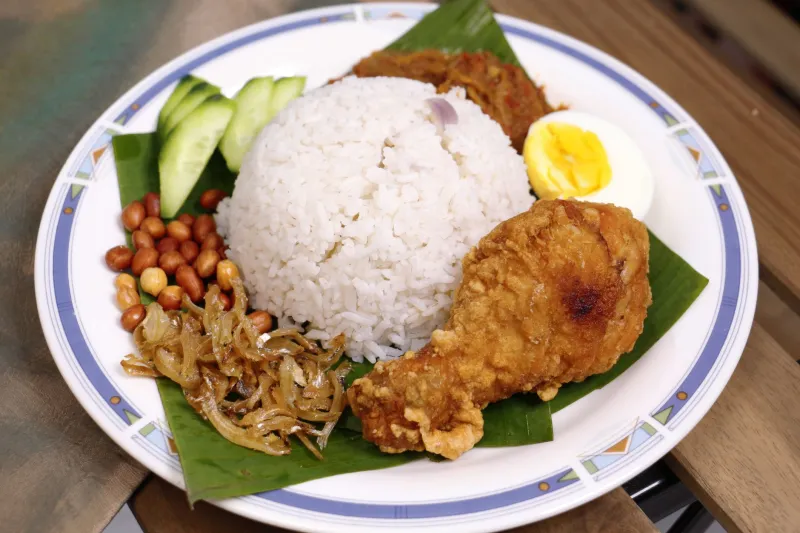
They want people to know that Malaysia's diversity is a feature, not a complication — that a country where you might eat roti canai for breakfast, nasi lemak for lunch, and bak kut teh for dinner, where your neighbors celebrate Eid and Deepavali and Chinese New Year with equal enthusiasm, produces people who are genuinely skilled at navigating difference.
They want people to know that the immigrant experience is not a single arc from struggle to success. It's messy and ongoing and sometimes the most honest version of it doesn't make a good movie.
And they want people to know that being Malaysian American isn't a compromise between two identities. It's its own thing — specific, complicated, and entirely worth understanding on its own terms.
This Is What TellMe Malaysia Is For
Stories like these don't always find a home. They're too specific for major outlets chasing broad audience appeal, too personal for academic papers, too nuanced for the kind of content that goes viral in thirty seconds.
But nuance is exactly what we're here for. TellMe Malaysia exists because the community deserves a platform where the complicated, honest, sometimes contradictory version of the Malaysian experience gets space to breathe.
If you're a Malaysian American with a story that hasn't been told yet — tell us. This platform is yours.
Share your story in the comments or submit a personal essay to our community section. Your voice belongs here.